Non Emergency Medical Transportation Maryland: A Provider Guide to the County Grant Model
If you have researched NEMT in other states, Maryland can look confusing at first. There is no single statewide broker handing out trips the way Georgia, New York, or Louisiana work. Instead, Maryland runs its Medicaid transportation program through local government. For a transportation company, that difference changes almost everything: who you talk to, how trips reach you, what paperwork matters, and how you grow.
This guide explains how non emergency medical transportation Maryland programs are structured, where providers fit, what local programs tend to expect, and how the right software helps you keep up with several counties at once.
How Maryland Organizes Medicaid Transportation
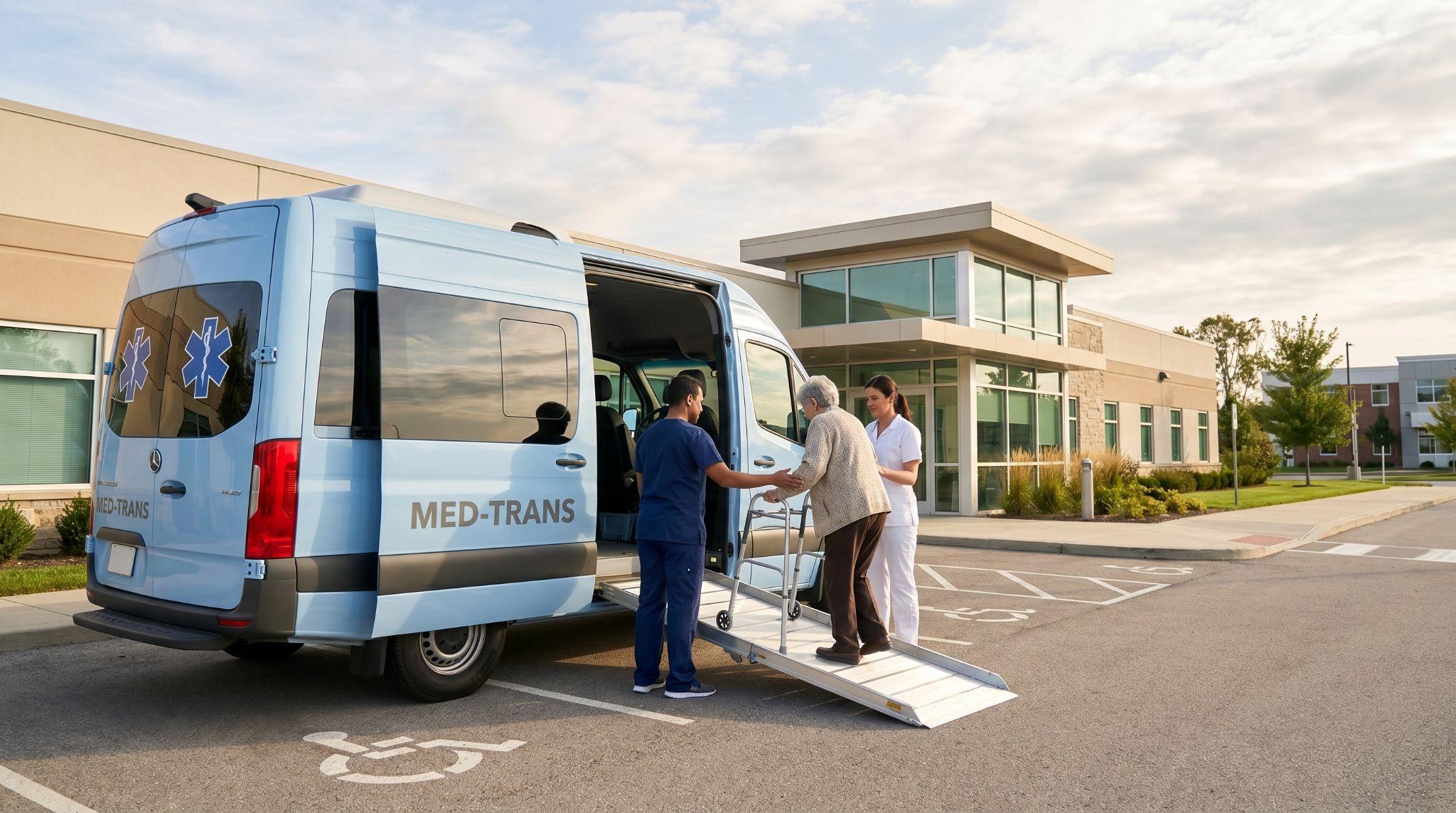
Maryland Medicaid treats NEMT as a service of last resort for people who have no other way to reach covered medical care. That includes riders who can travel in a regular vehicle as well as people who need a wheelchair van or a stretcher.
Rather than paying a private broker, the Maryland Department of Health funds the program through the NEMT Transportation Grants program. The grantees are the local health departments in each jurisdiction, along with the Montgomery County Department of Transportation. These local agencies administer transportation as agents of the state, and the state monitors their funding on a quarterly basis.
In practice, that means a rider in Allegany County, a rider in Baltimore City, and a rider in Montgomery County each deal with their own local program. Each local office handles eligibility checks, trip requests, and scheduling for its area, and each decides how to deliver rides. Some use public or county operated vehicles, and many contract with private transportation companies to cover demand.
A Recent Change Worth Knowing
In early 2026 the Maryland Department of Health published a public notice amending the State Plan to cover lodging and meal expenses connected to NEMT, with a proposed effective date of January 1, 2026. The change mostly affects riders who must travel long distances for care, but it signals that the state continues to refine the program. Providers who serve rural counties or long trips to specialty centers should watch for how local programs put this into practice.
Where Private Providers Fit
Because non emergency medical transportation Maryland services are delivered locally, private companies usually win work by building relationships with individual local health departments rather than signing one broker agreement. Common paths include:
- County vendor agreements: Many local programs contract with private carriers for ambulatory, wheelchair, or stretcher trips. Contract terms, rates, and processes vary by jurisdiction.
- Procurement opportunities: Some counties issue formal solicitations for transportation services. Watching local procurement sites helps you catch these.
- Managed care and other payers: Beyond the grant program, providers often serve hospitals, dialysis centers, assisted living facilities, private pay riders, and other healthcare contracts.
- Waiver and community programs: Some riders receive transportation through other state or county funded programs with their own rules.
The upside of the county model is that relationships matter, and a reliable provider can become the go to carrier for a local program. The downside is that every jurisdiction may have its own forms, reporting expectations, and billing schedule.
What Local Programs Typically Expect From Providers
Requirements differ by county, so always confirm the details with each local health department. Expectations commonly include:
- Proper business registration and insurance at the levels the contract requires
- Vehicles appropriate for the level of service, including ADA compliant wheelchair vans
- Driver background checks, valid licenses, and clean driving records
- Driver training in passenger assistance, wheelchair securement, and patient privacy
- Accurate trip records showing pickup and drop off times, mileage, and rider confirmation
- Timely, accurate invoicing in the format the program requests
- Prompt communication about late pickups, no shows, and incidents
The common thread is documentation. When a local program reviews your invoices, it needs to see that each trip happened as billed. Paper logs and spreadsheets make that hard to prove at scale.
Operational Challenges in Maryland
Different Geography, Different Demands
Maryland packs dense urban areas, suburban corridors, and rural mountain and shore counties into a small state. A fleet serving Baltimore City faces traffic and tight appointment windows, while a fleet on the Eastern Shore or in Western Maryland deals with long distances between pickups. Scheduling that works in one area can fail badly in another.
Multiple Funding Sources
Many Maryland providers carry county trips alongside facility contracts and private pay. Each source may have its own rate, documentation rules, and invoice format. Without a system that separates them cleanly, billing errors and missed revenue follow.
Recurring Trips
Dialysis, therapy, and other standing appointments make up a large share of NEMT volume. Managing recurring schedules, cancellations, and changes by hand is time consuming and error prone.
Long Distance and Out of Area Trips
Riders sometimes need care at specialty centers far from home. These trips tie up a vehicle for hours, so planning them well protects the rest of the day's schedule.
How NEMT Software Helps Maryland Providers
Running non emergency medical transportation Maryland operations across several programs is exactly the kind of work dispatch software is built for. Useful capabilities include:
- Payer and program separation: Tag each trip by funding source so rates, rules, and invoices stay correct for every county and contract.
- Recurring trip management: Set up standing appointments once and adjust individual dates when plans change.
- Route optimization: Group trips efficiently, especially in rural areas where deadhead miles add up quickly.
- Driver app with GPS and timestamps: Capture pickup and drop off times, mileage, and rider confirmation automatically.
- Real time tracking: Answer "where is my ride" calls quickly and catch late trips before they become complaints.
- Invoicing and reporting: Produce clean invoices and trip reports for each program without rebuilding spreadsheets every month.
RoutingBox is NEMT dispatch software built for these needs. Its plans start at $50 per vehicle per month and include unlimited trips, unlimited dispatchers, a driver app, real time tracking, broker integrations, automation tools, reporting, and invoicing. For providers juggling several Maryland jurisdictions and private contracts, having everything in one system removes much of the manual work.
Building Strong Relationships With Local Programs
Because the system is local, reputation travels quickly. Providers who earn repeat business tend to share a few habits:
- Be reliable before being big. A small fleet that never misses a dialysis pickup is more valuable to a county than a large fleet with frequent late arrivals.
- Communicate early. Let the program know about delays, vehicle issues, or capacity limits before they become problems.
- Make invoices easy to approve. Clean, consistent documentation means faster payment and fewer disputes.
- Track your own performance. On time rates, no show rates, and complaint trends help you improve and give you evidence when you ask for more work.
- Know each county's preferences. Keep notes on contacts, forms, and processes for every jurisdiction you serve.
Expanding to New Counties
Growth in Maryland often means adding one jurisdiction at a time. Before you expand, check whether your current vehicles and drivers can handle the new geography, whether you need a satellite location, and how the new county's processes differ from those you already know. Software that lets you add new programs, rates, and service areas without rebuilding your workflow makes expansion far less painful.
Start With Data Before You Expand
Before pitching a new county, pull your own numbers. How many trips per vehicle per day are you completing? What is your on time percentage? How many miles do your vehicles drive empty? These figures help you price contracts realistically and show local programs that you run a disciplined operation. Dispatch software that reports these metrics automatically makes this step easy rather than a weekend spreadsheet project.
Serving Riders Well
The people who rely on non emergency medical transportation Maryland programs are often older adults, people with disabilities, and patients managing chronic conditions. Small details make a big difference to them: a driver who calls ahead, help with a walker or a bag, and a vehicle that arrives inside the window every time. Providers who train drivers on patient care, not just driving, earn loyalty from riders and from the local programs that hear their feedback. Consistent service is also the most persuasive case you can make when you ask a county for more non emergency medical transportation Maryland trips.
Frequently Asked Questions
Does Maryland use a statewide NEMT broker?
No. Maryland funds NEMT through grants to local health departments and the Montgomery County Department of Transportation, which administer transportation locally.
How do I become a provider for non emergency medical transportation Maryland programs?
Contact the local health department in each jurisdiction you want to serve, ask about vendor requirements and procurement opportunities, and make sure your insurance, vehicles, and driver credentials meet their standards.
Do requirements differ by county?
They can. Contract terms, documentation, and invoicing processes vary, so confirm the details with each local program.
What software features matter most in Maryland?
Payer separation, recurring trips, route optimization, GPS verified trip records, and flexible invoicing are especially valuable when you serve several local programs.
Run Your Maryland Fleet With Confidence
The county based structure of non emergency medical transportation Maryland programs rewards providers who are organized, reliable, and easy to work with. The right tools make that possible as you grow. See how RoutingBox NEMT software helps providers manage trips, drivers, and billing across every program they serve, or review RoutingBox pricing.
Sources: Maryland Department of Health, NEMT public notice 26 0002 (health.maryland.gov); RoutingBox pricing page (routingbox.com).
Ready to upgrade your NEMT software?
Talk to our Team of Experts and let's make RoutingBox part of your story as well.